When building or upgrading a PC, one of the most common questions users face is whether to stick with DDR4 or move on to DDR5. The debate around ddr4 vs ddr5 is more relevant than ever, as each generation of memory offers distinct advantages in speed, efficiency, and compatibility.
While DDR4 remains widely available and cost-effective, DDR5 brings next-level performance designed for modern gaming, productivity, and demanding workloads. In this article, we’ll break down the key differences every user should know to help you decide which RAM type best suits your needs.
Physical and Technical Differences
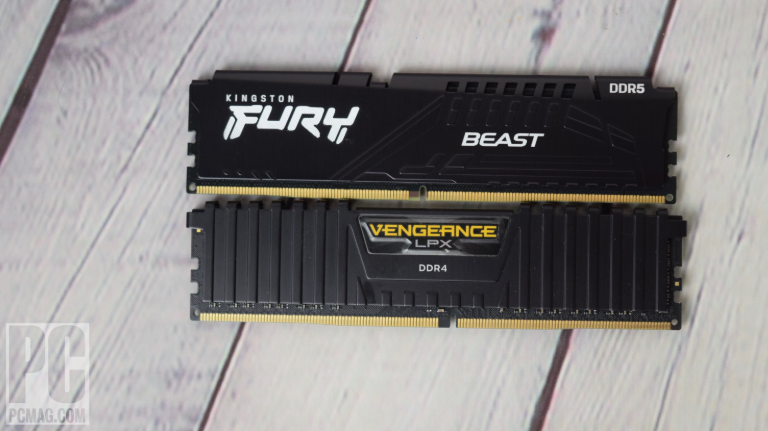
DDR4 and DDR5 desktop memory both use 288-pin UDIMMs, but differ in design and architecture:
- Form Factor & Pins: DDR4 and DDR5 have different notch positions, making them incompatible. DDR5 also includes a built-in PMIC for improved power management.
- Channel & Bank Architecture: DDR4 has a single 64-bit channel with 16 banks, while DDR5 uses dual 32-bit subchannels with 32 banks, allowing better parallelism and faster memory access.
- Power Management: DDR4 relies on the motherboard, whereas DDR5’s PMIC improves efficiency and thermal control.
- Compatibility: Despite similar size and pin count, DDR4 and DDR5 cannot be used interchangeably due to electrical and layout differences.
DDR5 offers enhanced performance and efficiency, but you must ensure motherboard compatibility when upgrading.
See also: Ultimate Guide to Different Dart Games and How to Play Them
Speed & Bandwidth: DDR4 vs DDR5
The biggest difference between DDR4 and DDR5 memory is their speed and bandwidth, which directly affect performance in gaming, productivity, and data-intensive applications.
- DDR4: Typical speeds range from 2133 MHz to 3200 MHz, with some overclocked modules reaching around 5000 MHz. Bandwidth is lower, limiting data transfer rates for demanding applications.
- DDR5: Offers much higher speeds, starting around 4800 MHz and going beyond 8000 MHz in high-end modules. With improved memory architecture, DDR5 provides greater bandwidth, allowing faster data transfer and better performance in multitasking, gaming, and professional workloads.
DDR5 is faster and handles more data at once, making it better for high-performance systems, while DDR4 is sufficient for everyday tasks and budget builds.
Capacity & Scalability: DDR4 vs DDR5
DDR5 memory offers much higher capacity and scalability compared to DDR4, which is important for multitasking, professional work, and future-proofing your system. DDR4 modules typically max out at 32GB per DIMM, and most consumer motherboards support a total system memory of 64GB to 128GB, depending on the number of slots. DDR5 modules, however, can reach 128GB per DIMM, allowing systems to achieve much higher total memory.
This larger capacity makes DDR5 perfect for running multiple applications simultaneously without slowdowns. It also enhances performance for professional software such as video editing, 3D rendering, and data analysis, providing faster processing and greater efficiency. As software and operating systems demand more memory, DDR5 ensures your system stays capable and future-proof, reducing the need for immediate upgrades.
DDR5 offers greater capacity and scalability, making it the ideal choice for users seeking seamless multitasking, high-performance professional applications, and a system that remains capable and future-ready for years.
Power Efficiency & Voltage
DDR5 memory is more energy-efficient than DDR4, which helps reduce electricity use, lower heat, and keep your system stable.
- Operating Voltage:
DDR4: Standard 1.2V, can go up to 1.35V when overclocked.
DDR5: Runs at 1.1V, using about 20% less power than DDR4.
- On-Module Power Management:
DDR5 has a built-in Power Management Integrated Circuit (PMIC), moving voltage control from the motherboard to the memory itself. This:
Delivers power more efficiently, saving energy.
Helps spread heat evenly, keeping the system cooler.
Improves stability by controlling power fluctuations.
- Heat and System Stability:
DDR4: Higher voltage can cause more heat, sometimes needing extra cooling.
DDR5: Lower voltage and PMIC reduce heat, making your system quieter and cooler.
DDR5’s improved power efficiency and voltage management reduce energy consumption, lower heat, and enhance system stability, making it a reliable and efficient memory solution.
Latency Considerations: DDR4 vs DDR5
DDR5 memory is faster and can handle more data at once than DDR4, but it has slightly higher CAS latency. Even so, its higher speed and bandwidth usually make up for this, especially in gaming and other tasks that require fast memory.
- CAS Latency: DDR4 typically has a CAS latency of 16, while DDR5 starts around 32.
- Real-World Performance: DDR5’s higher latency is balanced by its faster speed, so the actual delay is about the same as DDR4.
- Faster Speeds: DDR5’s faster clock speeds increase memory bandwidth, helping to offset the higher latency. For example, DDR5-5600 CL36 has similar latency to DDR4-3200 CL22 but can transfer much more data.
- Gaming and Sensitive Tasks: DDR5’s higher latency has little practical effect. Tests show DDR5-4800 CL40 adds only about 3% more delay compared to DDR4-3200 CL22, which most users won’t notice.
Although DDR5 has slightly higher latency, its faster speeds and greater bandwidth usually provide the same or better performance than DDR4. This makes DDR5 an excellent choice for gaming, professional work, and high-performance computers.
DDR4 vs DDR5: Compatibility and Availability
DDR4 and DDR5 are physically incompatible due to different pin layouts and notch positions, so each requires a compatible motherboard. Intel’s 12th and 13th Gen CPUs can use either DDR4 or DDR5, depending on the motherboard, while AMD’s AM5 platform (Ryzen 7000/9000 series) supports DDR5 only.
- Availability & Pricing: DDR4 remains widely available but has become more expensive due to supply shortages, while DDR5 prices are gradually decreasing as adoption grows, though high-capacity modules remain costlier.
- Key Differences: DDR5 offers higher speeds (up to 8,000+ MHz), larger capacities (up to 256GB per module), lower voltage (1.1V), on-DIMM power management (PMIC), and on-die ECC. DDR4 has lower latency but lower bandwidth, smaller capacity, and relies on motherboard-based power management.
- Choosing Memory: For upgrading older systems, DDR4 is usually the only option. For new builds, especially with Intel 12th/13th Gen or AMD Ryzen 7000/9000 CPUs, DDR5 is recommended for better performance and future-proofing. DDR4 may still be more affordable, but the cost gap with DDR5 is narrowing.
Choosing Between DDR4 and DDR5 RAM
When deciding between DDR4 and DDR5, consider your use case, budget, and plans for future upgrades.
When to Choose DDR4
- Budget Builds: DDR4 is cost-effective, letting you invest more in other components like CPU or GPU.
- Older Systems: Compatible with Intel 10th/11th Gen CPUs and AMD Ryzen 3000/5000 series.
- Everyday Tasks: Suitable for web browsing, office apps, and media consumption.
Considerations
- Performance Limitations: DDR4 may struggle with future apps or games that require higher memory bandwidth.
- Future Upgrades: May not support the latest features and technologies.
When to Choose DDR5
- High-End Gaming: Faster speeds and higher bandwidth improve performance in memory-intensive games.
- Professional Workloads: Video editing, 3D rendering, and data analysis benefit from DDR5’s larger capacity and bandwidth.
- Future-Proofing: Prepares your system for upcoming software and games that demand faster memory.
Considerations
- Cost: DDR5 is more expensive than DDR4.
- Platform Compatibility: Ensure your motherboard and CPU support DDR5 (Intel 12th/13th Gen, AMD Ryzen 7000 series).
DDR4 is cost-effective and suitable for older systems and everyday tasks, while DDR5 offers higher performance and future-proofing for gaming and professional workloads.