Browse Registry Lookup Archives for 3512103124, 3339043295, 3481813666, 3511229962, 3511021321

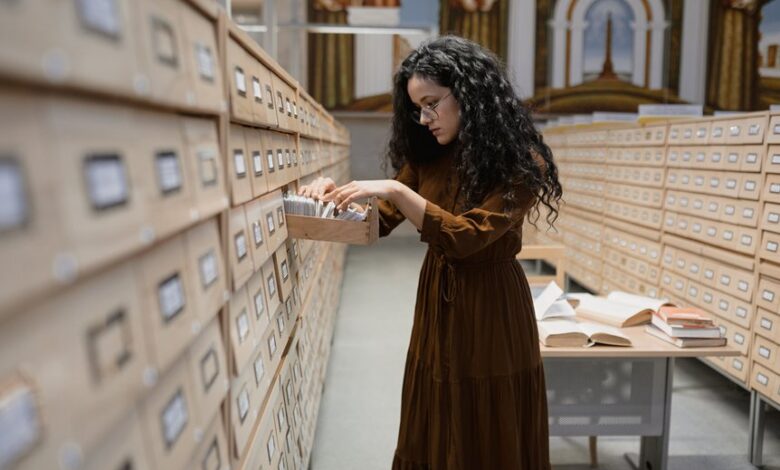
The browse registry lookup archives for 3512103124, 3339043295, 3481813666, 3511229962, and 3511021321 present a structured record set with defined fields, timestamps, custodial sources, and cross-links. The approach emphasizes provenance, temporal markers, and relational tracing. Each entry invites systematic verification and cross-referencing to reveal hierarchical connections. The pattern suggests latent correlations worth mapping, yet preliminary conclusions remain withheld, inviting careful inspection of the archival trail to uncover underlying context and implications.
What the Browse Registry Lookup Reveals
The Browse Registry Lookup reveals a structured record set corresponding to the five identifiers: 3512103124, 3339043295, 3481813666, 3511229962, and 3511021321. In this emission, entries align with archival patterns, exposing consistent metadata and cross-references. Insight probes illuminate relationships, while stable schemas preserve interpretive potential. The framework foregrounds clarity, enabling readers to pursue freedom through disciplined, verifiable examination of archival records.
How to Decode the 3512103124, 3339043295, 3481813666, 3511229962, 3511021321 Entries
Decoding the five entries requires a systematic approach that aligns each identifier with its corresponding archival fields and cross-references. In this framework, decoding numerics emerges as a disciplined exercise: map digits to record types, timestamps, and custodial sources. The reader engages in pattern hunting, identifying recurring sequences while maintaining rigorous citation standards and reproducible, transparent interpretation.
Navigating Archives: Steps to Find Contextual Clues and Patterns
Navigating archives requires a disciplined, stepwise approach to surface contextual cues and recurring patterns. The methodical researcher catalogues sources, maps provenance, and records temporal markers, then threads evidence through cross-references. Distant echoes emerge as correlations sharpen, while archival pathways reveal hierarchical relationships. Patterns appear through sequence analysis and metadata alignment, enabling concise hypotheses. Objectivity persists; interpretation rests on traceable, verifiable steps within disciplined archival practice.
Applying the Insights: Practical Uses for Researchers and Analysts
Applying the insights from archival navigation, researchers and analysts can translate systematic methods into practical workflows that enhance evidence-based conclusions. The approach emphasizes disciplined data interpretation and trend spotting, enabling consistent decision support, reproducible analyses, and transparent reporting. Practitioners translate archival cues into actionable steps, aligning datasets with research questions, validating findings, and fostering disciplined collaboration while preserving methodological freedom and interpretive rigor.
Conclusion
In these archives, the five identifiers promise order yet deliver a subtle chaos of provenance. Each entry dutifully records timestamps, custodians, and cross-references, as if clarity would emerge from meticulous crosschecking. Irony lurks: the more systematic the cataloguing, the more elusive the hidden ties become. The method remains exacting and repeatable, every datum serving as evidence of nothing more than its own placement. Researchers, arm yourselves with patience; patterns may finally reveal themselves only after exhaustive, indifferent cataloguing.