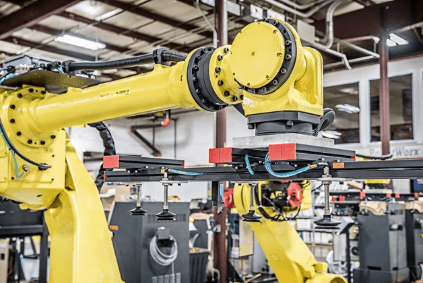
In the high-speed world of 2026 manufacturing, the ability to handle diverse materials with precision is the ultimate competitive advantage. While mechanical claws and magnetic lifts have their place, the vacuum gripper has emerged as the versatile king of end-of-arm tooling (EOAT). From lifting ultra-thin semiconductor wafers to palletizing heavy corrugated boxes, vacuum technology provides a non-invasive, secure, and rapid handling solution that traditional mechanical systems simply cannot match.
By utilizing the pressure differential between a vacuum chamber and the surrounding atmosphere, a vacuum gripper transforms a robotic arm into a sophisticated instrument capable of “breathing” life into automated production lines.
The Core Mechanics of a Vacuum Gripper
To understand why this technology is so effective, we must look at how a vacuum gripper creates its holding force. Unlike mechanical grippers that rely on friction and physical “pinching” force, vacuum systems use suction to create a seal against the workpiece.
How Suction is Generated
There are two primary methods for powering a vacuum gripper:
- Compressed Air (Venturi Ejectors): These systems use a flow of compressed air to create a vacuum through the Venturi effect. They are lightweight, have no moving parts, and offer near-instantaneous response times, making them ideal for high-speed pick-and-place cycles.
- Electric Vacuum Pumps: For applications where compressed air is unavailable or mobile robots (AMRs) are used, integrated electric pumps provide a self-contained solution. These are highly energy-efficient and offer precise control over vacuum levels for handling fragile items.
See also: High-tech innovations making cargo inspections faster and safer
Why the Vacuum Gripper is Replacing Mechanical Claws
Industrial engineers are increasingly choosing the vacuum gripper over traditional mechanical alternatives due to its inherent flexibility and safety profile.
1. Non-Destructive Handling
One of the most significant advantages of a vacuum gripper is its “soft touch.” Because it distributes the lifting force across the surface of the object rather than concentrating it on two or three pressure points, it significantly reduces the risk of crushing, scratching, or deforming delicate products like electronics or food items.
2. Handling Irregular and Large Objects
A mechanical gripper is often limited by its “jaw” opening. In contrast, a vacuum gripper can be designed with a large-area foam pad or a modular array of suction cups. This allows a single robot to lift a 2-meter-wide sheet of glass or a 50kg bag of cement with the same ease.
3. Reduced Positioning Constraints
Mechanical grippers require precise alignment to ensure the “fingers” can wrap around the part. A vacuum gripper only requires contact with a single flat or slightly curved surface, allowing for much greater tolerance in part positioning and orientation.
For a detailed technical guide on selecting the right gripper materials and configurations for your specific machinery, you can refer to this comprehensive resource on industrial vacuum components and gripper technology.
Key Applications Across 2026 Industries
The adaptability of the vacuum gripper has led to its dominance in several high-growth sectors:
- Logistics & E-commerce: Automated palletizing systems use multi-zone vacuum grippers to handle boxes of varying sizes and weights in a single run without tool changes.
- Automotive Manufacturing: Large surface grippers are used to move hoods, doors, and windshields during assembly, providing a secure grip that won’t mar the Class-A finish of the metal.
- Food & Pharmaceuticals: Specialized “Soft Touch” vacuum grippers made from food-grade silicone allow for the rapid sorting of baked goods or the delicate handling of medical vials in cleanroom environments.
Conclusion: Engineering a Seamless Workflow
As automation moves toward “Industry 4.0” standards, the vacuum gripper stands as a pillar of efficient material handling. By offering a solution that is lightweight, fast, and remarkably gentle, it allows manufacturers to push the boundaries of throughput and product variety. When you choose a vacuum-based solution, you aren’t just picking up a part—you are picking up productivity.