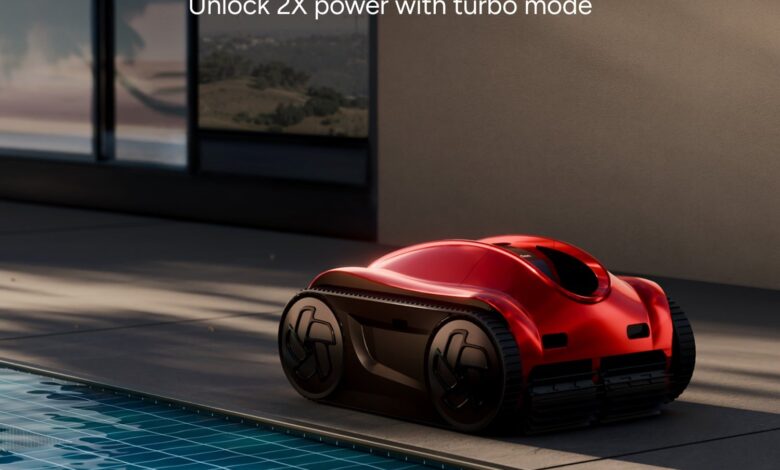
If you’ve ever spent a Saturday afternoon wrestling a manual vacuum across an oddly shaped pool, chasing leaves into corners that seem designed to trap debris, you already know the frustration. Freeform curves, tanning ledges, and L-shaped layouts turn routine cleaning into a time-consuming battle that no homeowner should have to fight weekly. This is precisely where robotic pool cleaners enter the picture—not as a luxury, but as a genuinely transformative tool for maintaining crystal-clear water with minimal effort.
However, not all robotic cleaners deliver on that promise equally. The difference between a robot that bumbles randomly and one that systematically conquers every inch of your pool comes down to one critical factor: navigation technology. This article dives deep into how advanced smart navigation—powered by automation, intelligent mapping algorithms, and precision sensors—directly solves the efficiency problems that tech-savvy homeowners care about most. From understanding the navigation systems available today to matching the right technology to your specific pool layout, you’ll walk away with actionable insights to make a confident, informed decision for a permanently cleaner pool.
Why Navigation is the Heart of the Best Pool Cleaner Robot
Smarter cleaning doesn’t start with stronger suction or bigger filters—it starts with smarter navigation. A robotic pool cleaner is only as effective as its ability to understand where it is, where it’s been, and where it still needs to go. Without intelligent pathfinding, even the most powerful motor simply pushes water and debris around without purpose.
Basic robotic cleaners rely on random-pattern movement, essentially bouncing off walls and obstacles like a billiard ball, hoping that enough time in the water will eventually cover the entire surface. For a simple rectangular pool, this approach might produce acceptable results after extended run times. But for anything more complex—a kidney-shaped design, an integrated spa, or a pool with steps and benches—random navigation leaves dead zones that accumulate algae and sediment week after week.
Advanced navigation systems fundamentally change this equation. Gyroscopic navigation uses internal sensors to track the robot’s orientation and angular movement, allowing it to maintain straight cleaning lines and execute precise turns without external reference points. VSLAM (Visual Simultaneous Localization and Mapping) takes this further by using onboard cameras to capture visual data from the pool’s surfaces, building a real-time map of the environment while simultaneously tracking the robot’s position within that map. LiDAR-based systems, though less common in underwater applications, measure distances using light pulses to create highly accurate spatial models.
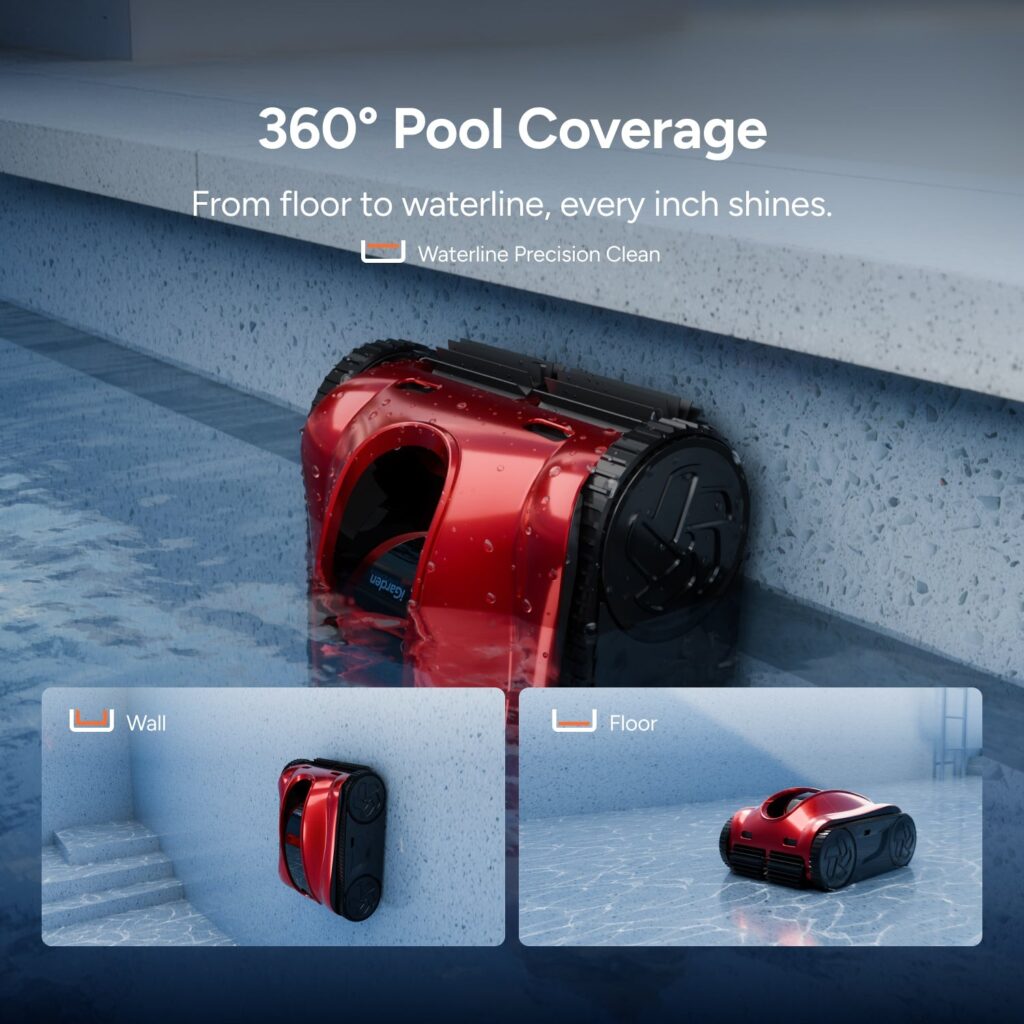
Each system carries distinct strengths. Gyroscopic sensors excel at maintaining consistent path patterns and are highly reliable in murky water conditions where visual systems might struggle. VSLAM offers superior adaptability to irregular shapes because it continuously updates its understanding of the environment. Some premium models combine multiple systems—pairing gyroscopes with sonar or camera-based mapping—to achieve redundancy and precision that no single technology delivers alone.
The practical implication for homeowners with complex pools is significant: these technologies transform a robotic cleaner from a hopeful time-saver into a systematic cleaning machine that addresses every surface methodically, reducing both cleaning cycles and the frustration of finding missed spots after a completed run.
See also: High-tech innovations making cargo inspections faster and safer
Decoding Pool Cleaning Technology: The Evolution of Robotic Navigation
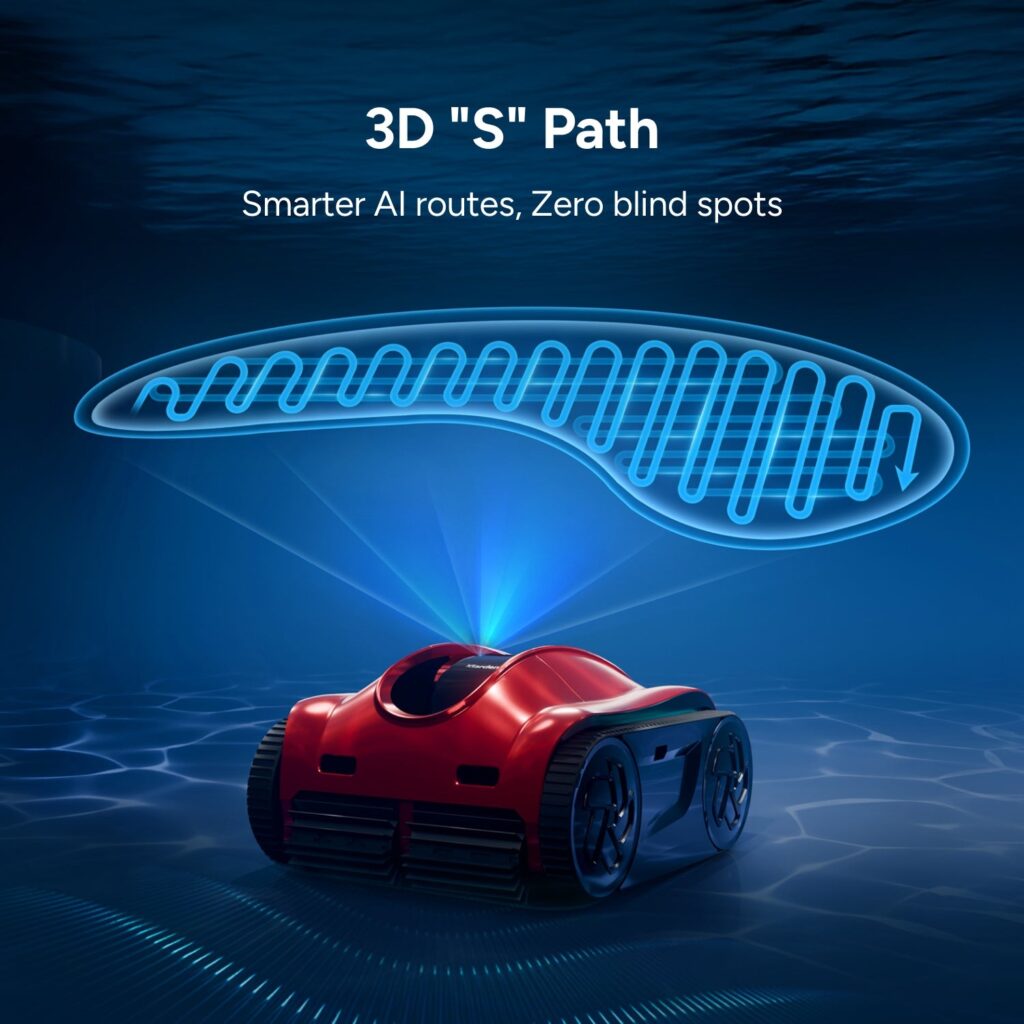
Understanding how these navigation systems actually work beneath the waterline reveals why they produce such dramatically different results than their random-movement predecessors. A gyroscope-based system continuously measures rotational velocity across multiple axes, feeding that data into an onboard processor that calculates the robot’s exact heading and distance traveled. This allows the cleaner to execute precise parallel passes—much like a lawnmower cutting grass in neat rows—ensuring no strip of pool floor goes untouched. Sonar-based systems complement this by emitting ultrasonic pulses that bounce off walls, steps, and obstacles, returning distance measurements that help the robot understand the physical boundaries of its environment in real time.
Vision-based systems operate on a more sophisticated level. Onboard cameras capture thousands of reference points from the pool’s surfaces—tile patterns, grout lines, surface textures—and proprietary algorithms stitch these into a coherent spatial map. As the robot moves, it continuously compares its current visual input against this evolving map, correcting drift and confirming position with remarkable accuracy. When the robot encounters a raised bench, a set of curved stairs, or a shallow tanning ledge, these systems detect the geometry change through a combination of depth sensing and surface recognition, adjusting speed, brush angle, and path direction accordingly rather than simply colliding and reversing.
The algorithmic layer tying all this sensor data together is where true optimization happens. Path-planning algorithms divide the pool into zones, prioritize high-debris areas based on previous cleaning data, and calculate the most efficient route to achieve complete coverage in the shortest possible time. When a section is confirmed clean, the robot doesn’t wastefully revisit it—it moves to unfinished territory with purpose.
How Enhanced Navigation Improves Cleaning Efficiency
The efficiency gains from systematic navigation are measurable and meaningful. Robots using intelligent path planning typically complete a full cleaning cycle in significantly less time than random-pattern models covering the same area, because they eliminate redundant passes and wasted traversals. This shorter run time translates directly into lower energy consumption per cleaning session and reduced wear on internal components like filter cartridges and drive motors, extending their operational lifespan considerably.
Systematic coverage means one or two well-executed passes replace the three or four random cycles a basic cleaner might need to achieve comparable results. For the homeowner, this isn’t just an abstract improvement—it means the robot finishes before your morning coffee gets cold, the pool is guest-ready on demand, and you aren’t scheduling multiple back-to-back cleaning runs hoping for complete coverage. Perhaps most valuably, advanced navigation virtually eliminates the need for manual intervention. You no longer need to reposition the robot mid-cycle, manually guide it toward a neglected corner, or follow up with a handheld brush on spots the machine consistently ignores. Deploy it, walk away, and trust the technology to handle the rest.
Conquering Complex Pool Shapes with Smart Navigation
Standard rectangular pools represent the easy case—any robotic cleaner can handle straight walls and predictable corners with reasonable competence. The real test arrives when your pool features freeform curves that sweep unpredictably, L-shaped extensions that create hidden alcoves, multi-level depths transitioning from shallow wading areas to deep diving zones, vanishing edges where the wall simply disappears, or tanning ledges that sit just inches below the waterline. Each of these architectural features creates a navigation challenge that exposes the limitations of basic random-pattern cleaners, which tend to circle endlessly in open areas while neglecting tight transitions and elevated surfaces entirely.
Advanced navigation systems tackle these challenges through continuous environmental adaptation. When a robot equipped with gyroscopic mapping encounters a freeform curve, it doesn’t simply bounce off the wall and head in an arbitrary direction—it tracks the curvature, maintaining consistent distance from the surface while adjusting its cleaning path to follow the contour precisely. For L-shaped pools, zone-division algorithms recognize the separate sections and treat each as a distinct cleaning area, ensuring the robot transitions between them deliberately rather than accidentally wandering from one to the other. Wall detection sensors allow the robot to climb vertical surfaces and scrub the waterline where calcium deposits and organic film accumulate most aggressively, while tile line tracking keeps the machine oriented along visual boundaries to maintain systematic coverage even on curved walls.
Multi-level pools present perhaps the most demanding scenario. A robot must detect depth transitions, navigate stairs without getting wedged, and clean shallow ledges that barely submerge its chassis. Vision-based systems excel here because they recognize geometric changes in real time—identifying where a step begins, calculating the angle of approach, and adjusting wheel traction and brush engagement accordingly. Consider a pool with an integrated spa connected by a narrow channel: a smart-navigation robot maps both bodies of water, navigates the passage, and cleans each section completely without human repositioning.
Choosing the Right Best Pool Cleaner Robot for Your Pool Layout
Matching the right navigation technology to your specific pool starts with honestly assessing your layout’s complexity. Begin by evaluating these factors: the number of distinct shape transitions (curves, angles, extensions), the presence of elevated features like ledges or benches, the variety of surface materials (plaster, tile, pebble, vinyl), total square footage including walls, and whether your pool includes attached features like spas or water features that create navigation obstacles.
For freeform and kidney-shaped pools, prioritize robots with gyroscopic navigation combined with wall-following algorithms—these systems maintain smooth curved paths without losing positional awareness. If your pool features multiple depth levels, stairs, or integrated benches, look for models with vision-based or sonar-assisted mapping that can detect elevation changes and adjust climbing behavior dynamically. Pools with extensive tile work or detailed surface patterns benefit most from VSLAM-equipped robots, which use those visual details as reference points for ultra-precise positioning.
Surface material matters for traction and brush compatibility. Rougher plaster and pebble finishes provide excellent grip for climbing robots but demand gentler brush options to avoid surface damage, while smooth tile and vinyl require aggressive treads for reliable wall adhesion. Match your pool’s dimensions to the robot’s cable length and battery capacity—an undersized robot in an oversized pool will run out of power before completing coverage, negating all navigation advantages. Finally, if your pool has a vanishing edge or infinity wall, confirm that the robot’s wall-detection system can recognize and safely navigate that boundary without attempting to climb over it. Taking these concrete steps ensures your investment in navigation technology actually delivers the systematic, hands-off cleaning experience your specific pool demands.
Maximizing Your Investment: Operating and Maintaining an Advanced Pool Robot
Owning a navigation-equipped robotic pool cleaner is only half the equation—deploying and maintaining it correctly ensures you actually realize the efficiency gains the technology promises. Start by choosing a consistent launch point each session. Placing the robot in the deepest section of the pool gives it the most unobstructed floor space to begin its initial mapping pass, allowing algorithms to establish a reliable baseline before tackling walls, steps, and elevated features. If your robot supports app-based scheduling, program it to run during off-peak hours when the water is still and debris has settled to the bottom, giving sensors the clearest possible environmental data to work with.
Navigation sensors demand regular attention to perform at their best. Camera lenses and sonar emitters collect mineral film and fine particulate over time, which gradually degrades mapping accuracy. After every three to four cleaning cycles, wipe optical sensors with a soft microfiber cloth and inspect ultrasonic ports for calcium buildup. Store the robot out of direct sunlight when not in use—prolonged UV exposure degrades rubber seals around sensor housings and can warp plastic lens covers, introducing distortion into visual mapping systems. Coil cables loosely rather than wrapping them tightly around the unit, which prevents internal wire fatigue that leads to intermittent power delivery and erratic navigation behavior.
When troubleshooting common issues, recognize that a robot repeatedly missing the same section usually indicates a dirty sensor rather than a software flaw. If the unit gets stuck on stairs or ledges consistently, check wheel treads for wear—reduced traction causes the robot to misjudge climbing angles, triggering retreat protocols prematurely. Resetting the mapping memory occasionally forces a fresh environmental scan, which resolves drift errors that accumulate in pools where furniture or accessories shift positions seasonally. These straightforward maintenance habits protect your investment and sustain the systematic, hands-off cleaning performance that justified choosing advanced navigation in the first place.
Smart Navigation: The Key to Effortless Pool Maintenance
The difference between a robotic pool cleaner that merely exists in your pool and one that genuinely transforms your maintenance routine comes down to navigation intelligence. Sophisticated pathfinding—whether driven by gyroscopic precision, visual mapping, sonar detection, or a combination of these systems—is the single most important differentiator separating adequate machines from truly exceptional ones. It’s the technology that turns a hopeful purchase into a reliable, hands-off cleaning solution.
The benefits compound across every aspect of pool ownership. Complex layouts that once demanded manual scrubbing and repositioning become fully automated challenges that smart robots solve systematically. Cleaning efficiency improves not just in coverage quality but in time, energy consumption, and component longevity. The hours you reclaim each month represent the real return on investment—time spent enjoying your pool rather than maintaining it.
As smart home technology continues advancing, pool care is no longer an isolated chore but an integrated part of an automated lifestyle. Brands like iGarden are helping drive this shift by bringing intelligent navigation into the broader smart home ecosystem, making it easier than ever to manage outdoor spaces alongside the rest of your connected home. The navigation systems available today already deliver remarkable precision, and they’ll only grow more capable. By understanding what these technologies do, how they match your specific pool’s demands, and how to maintain them properly, you’re positioned to make a purchase decision that delivers a permanently cleaner pool—not just this season, but for years to come.